





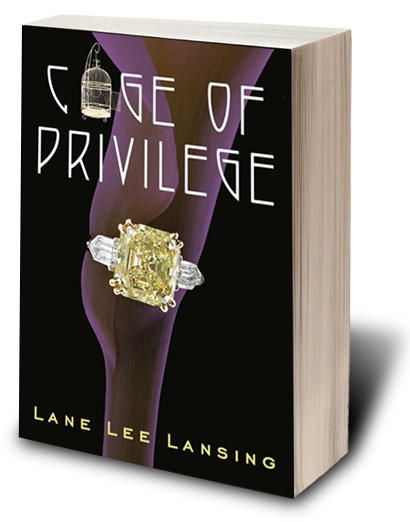
About Cage of Privilege
Jane Chambers Torrance never stopped to contemplate what drove her success in navigating the path that propelled her to become one of the wealthiest women in the world. She realized at a young age that plotting a journey toward the top echelon of society was her only desire. After toppling a princess’s designs to marry the man she loved, Jane and her husband built a nearly impenetrable empire around the nation’s ravenous consumption of energy. Embarking on a new life journey after her son had been savagely murdered, Jane leaves her prized Fifth Avenue penthouse in New York City to build a lavish estate in the Pacific Northwest.
Befriending fellow native Portlander Kate Carerra, she teaches the eager young apprentice how to build and sustain a powerful and overshadowing grip on business and politics. Jane becomes entrenched in her obsession to preserve her legacy for future generations and satisfy her own bouts of boredom. With the help of an ambassador’s wife, her brother - a United States Senator, and a team of extraordinarily loyal business advisors, Jane tempts fate by gambling with the ultimate sanctified gift: human life.
Using an array of characters familiar with the trappings of a jet-set lifestyle, author Lane Lee Lansing conjures up a startling tale weaving greed, indulgence, deceit, and corruption together with gluttonous sexual abandon and ravenous drug abuse in the novel Cage of Privilege. The storyline chronicles one family’s rise as they become a dominant force in politics and business, highlighting the sometimes savage means they use to build and retain their station at the top echelon of society.
The book investigates the plight of billionaire Jane Chambers Torrance and her family after her son is murdered. A sordid historical portrait blossoms from her charmed life to reveal its own fair share of misery. A question develops throughout the plot – asking readers, “Who is actually in this cage?” Moral bankruptcy threatens the most innocent of bystanders as a war involving financial terrorism and political corruption ensues.
“It’s been a journey inventing the lives of each character who all have different inspirations and expectations for their own lives,” noted Lansing. “When tragedies strike, the gut wrenching results could trigger significant discussion. How would our moral barometers respond if presented with a similar set of circumstances?”
The sexually-confused United States Senator Malcolm Chambers, Jane’s brother, is headed towards milestones in both age and retirement after 40 years as one of the senior-most lawmakers in the government’s upper chamber. As he leaves office, will his son be able to live up to the expectations his party and family have enjoyed from decades of successful manipulation as he runs for his father’s seat?
Political dynamics abound as alliances shift, promises are broken, and an intricate interpretation of campaign hyperbole specific to the odd dichotomies of how decisions that are made come to light. The book is an open referendum on the outright disgust many Americans hold for the lavish Vaudevillian aura that eclipses both the decision-making and electoral process today. Lansing, a literary persona who interprets political and social landscapes, specializing in unraveling the sophisticated web of the ultra rich. Launching the release of the book after the November election cycle was not coincidental. The book fuels debate as candidates articulate platforms benefitting both their constituencies and their own personal hidden agendas.
Lansing is baffled by publicity ploys orchestrated by billionaires such as Bill Gates and Warren Buffett. With the advent of public relations stunts like “The Giving Pledge,” the top one percent of the wealthiest citizens are trying to quell the brewing hatred of the wealthy by America’s shrinking middle class. The “make-nice” gentlemen’s agreement to give away at least half of one’s wealth at death is a thinly-veiled attempt to hide the elite’s assets in the same way the characters conspire within the book.
“‘Cage’ questions assumptions about our leaders in politics and business,” Lansing explained. “Getting back to the center of understanding our unique differences and compromising to create a better end product will require a calculated revolt rejecting either extreme in the political spectrum.”
Accompanying the book is a study guide that is free to download on this website that will invoke a spirited response leading participants to evaluate and question their own moral compass. The study guide also includes fun elements like staging a ‘Cage of Privilege’ party for a book club and creative writing exercises that engage readers in the literary process.

© 2013, Regency Media LLC. All Rights Reserved.